
Historical Cases
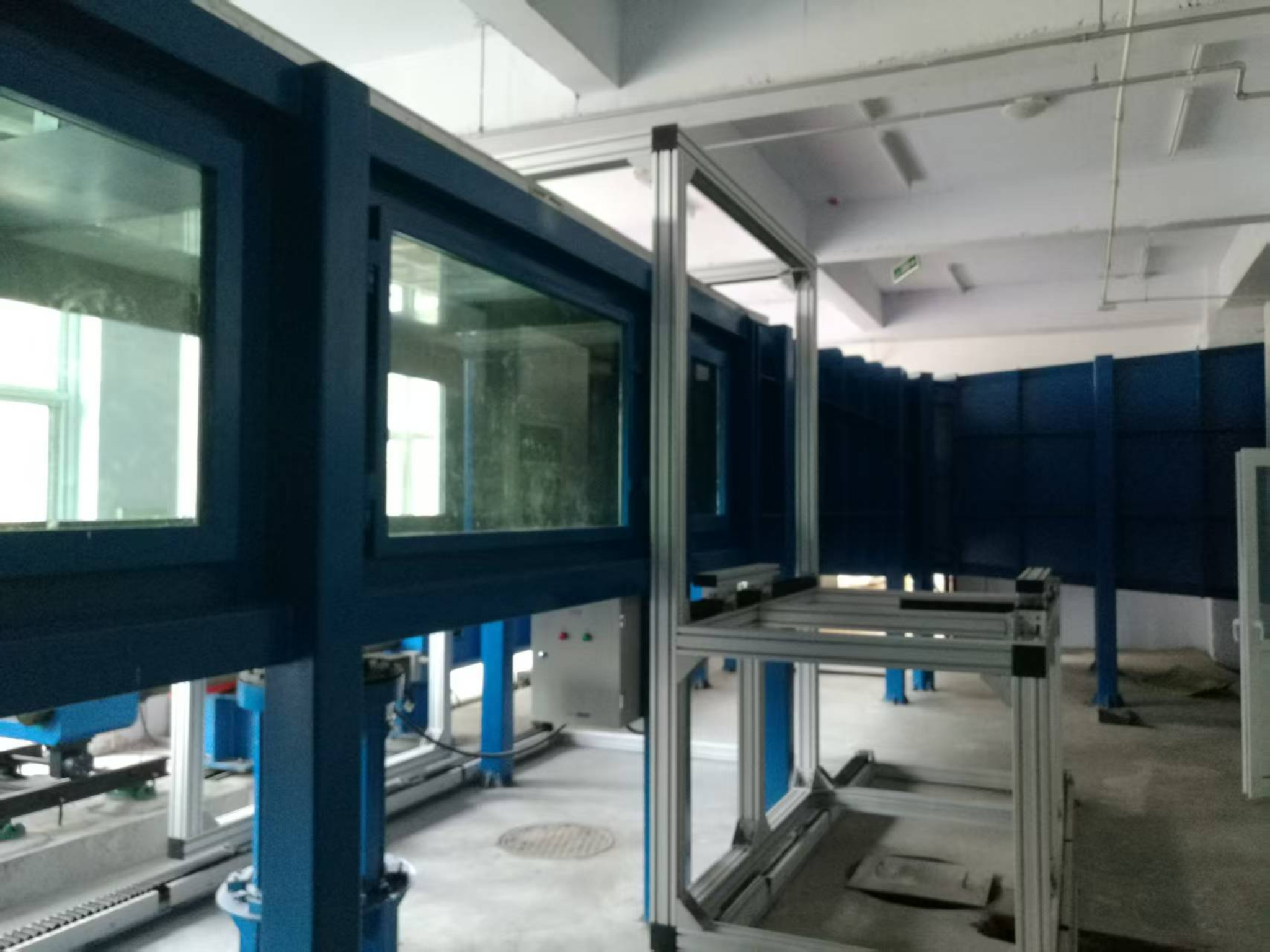
North China Electric Power University Atmospheric Boundary Layer Simulation Device (ABLS)
Project Category: New Energy and Wind Power · wind tunnel test device · Non-standard scientific research equipment
Project Overview
For the needs of wind power aerodynamics and atmospheric boundary layer flow research, Xi'an Xinghualang Technology Co., Ltd. is developed for the wind tunnel laboratory of the New Energy College of North China Electric Power University.Atmospheric boundary layer simulation device (AtmosphericBoundary LayerSimulator,ABLS)。
The device is used to construct atmospheric boundary layer flow field with different turbulence intensity, turbulence integral scale and wind shear characteristics under wind tunnel experimental conditions, and provides adjustable inflow conditions for wind turbine, wind turbine blades and related aerodynamic model tests.
The overall size of the device is 3 m × 3 mIt can be adapted to the wind tunnel laboratory binary test section and ternary test section. The main body adopts a large frame type multi-axis grid structure, which is composed 24 root transverse pivot and24Vertical rotation shaftconstitute a grid array with a monolithic grid feature size of about 12 cm. By adjusting the operating state of the grid system, the simulation of different atmospheric turbulence and wind shear conditions can be realized, which provides an experimental basis for the study of wind power aerodynamics in complex wind environment.
Main Performance
Device specifications:3 m × 3 m
Grid structure:24root horizontal axis × 24root vertical axis
Single-piece grille feature size:About12cm
Turbulence control range:5%~40%
Regulation range of turbulence integral scale:0.15 m~1.56m
Wind shear index control range:0.05~0.40
Adaptation ability:Taking into account the test requirements of binary test section and ternary test section
Project Features
Large-scale wind tunnel flow field control device
In response to3 mThe overall structure design of the wind tunnel test section is carried out, and the integration of grid array, support frame and related institutions is realized in a large spatial scale, which meets the installation and operation requirements of the wind tunnel test environment.
multi-parameter atmospheric boundary layer simulation
The device can regulate key inflow parameters such as turbulence, turbulence integral scale and wind shear index, and can construct representative atmospheric boundary layer flow conditions according to different research conditions.
high density multi-axis grid structure
Adopting24Root horizontal pivot and24The vertical shaft constitutes a large-scale grid array, forming a high-density flow field control unit in a limited test section, which provides a hardware basis for the experimental construction of complex turbulence structures.
Research on Aerodynamics for Wind Power
The device serves the aerodynamic research of wind turbines and wind turbine blades, and can cooperate with the existing aerodynamic load, flow field and vibration measurement system of the wind tunnel laboratory to provide a controlled inflow environment for the three-dimensional test of wind turbines and the two-dimensional test of blade airfoil.
Application Directions
Atmospheric boundary layer simulation | Wind turbine aerodynamics | Wind turbine blade aerodynamic characteristics | Complex turbulence inflow | Wind shear simulation | Wind tunnel flow field control | Experimental study on new energy equipment
Service Content
Scheme Design | Mechanical Structure Design | Grille System Design | Engineering Drawing | Parts Processing | Large Structure Assembly | Site Installation | System Commissioning
Project Background
The project relies on the wind tunnel laboratory of New Energy College of North China Electric Power University. Relying on the construction of the National Key Laboratory of New Energy Power System, the laboratory has the conditions for scientific research and teaching experiments related to the aerodynamics of wind turbines and blade airfoils.
The laboratory is equipped with ternary and binary test sections, of which the size of the ternary test section is 3 m(wide) ×3 m(High) ×20 m(long)Maximum wind speed 35 m/s; The size of the binary test section is 3 m(wide) ×1.5 m(High) ×4.5 m(long)Maximum wind speed 62 m/s. The configuration of the atmospheric boundary layer simulation device further expands the test capability of the wind tunnel in the study of complex atmospheric inflow and wind power aerodynamics.