
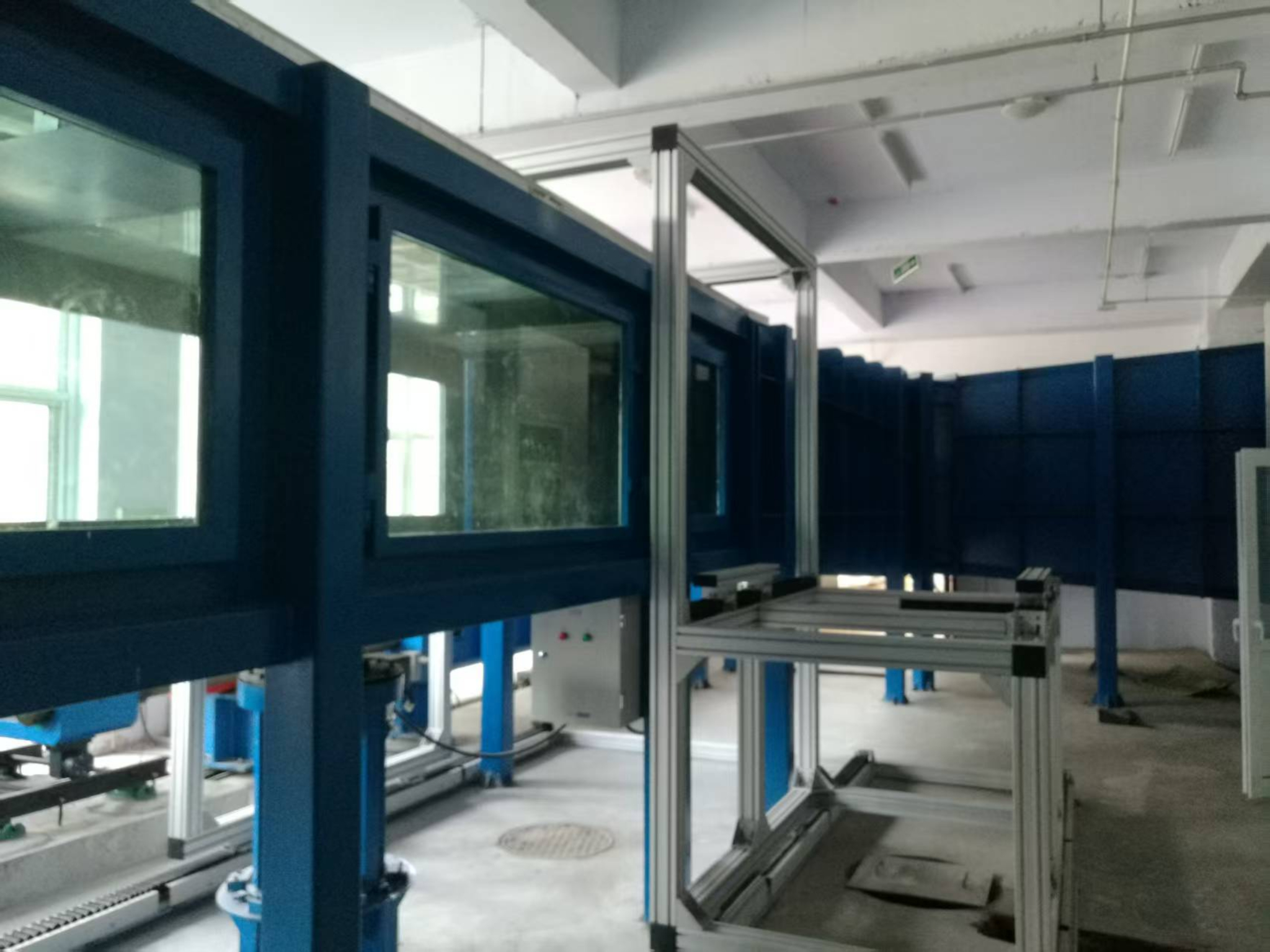
Metal propeller model
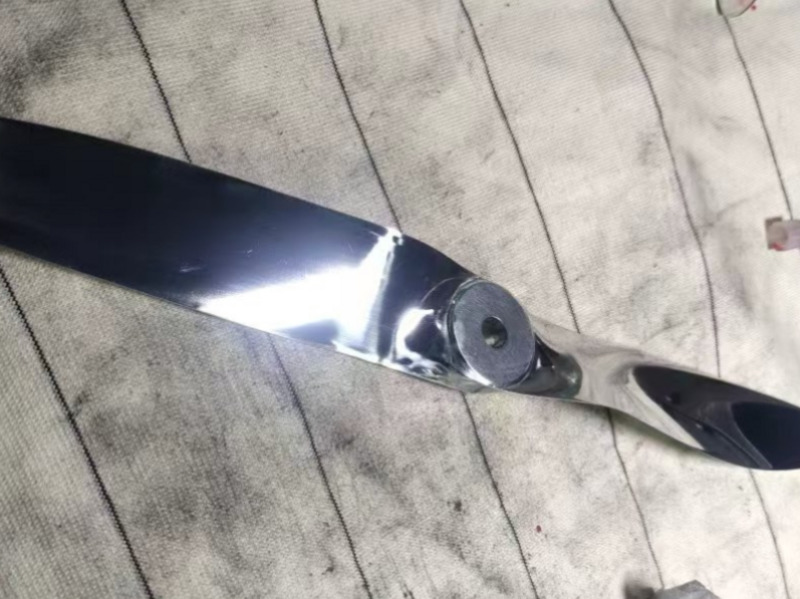
Precision reduction blade geometry, stable support rotation pneumatic test
The reliable repetition of propeller blade, pitch and interface is realized by high-precision metal processing, which provides a stable model basis for performance measurement in wind tunnel and water tunnel.
The thrust, power consumption, efficiency, load distribution, and noise characteristics of propellers are directly linked to the overall performance of aircraft, unmanned aerial vehicles, marine propulsion systems, and rotating power units. The test model must accurately replicate the blade profile and spatial twist within a limited scale, while maintaining sufficient strength, stiffness, and mounting accuracy under rotating conditions.
Metal propeller models are usually made of aluminum alloy, stainless steel and other materials, through three-dimensional modeling and CNC precision machining to control the blade type, pitch, disk surface ratio and hub connection size, can be used to obtain thrust, torque, pressure distribution, vibration and flow field and other test data.
Xi 'an Xinghualang Technology Co., Ltd. provides structural design, precision machining, assembly calibration and test interface adaptation services for metal propeller models for wind tunnel, water tunnel and rotating machinery test requirements, and can reserve necessary sensor and lead space according to pressure measurement, strain or rotation test schemes.
Core technology advantage
01 High-precision blade profile processing-to ensure that the theoretical geometry is consistent with the physical model.
According to the three-dimensional data provided by the customer, the blade section and the pitch distribution, the processing path design is completed, and the leading edge, trailing edge, tip and torsion transition area are mainly controlled.
Through the coordination of processing and detection, the influence of local profile error on aerodynamic force and flow field measurement is reduced.
02 High rigidity metal structure-adapt to stable rotation and repeated test
The metal material has good dimensional stability and structural rigidity, and can maintain the blade shape within the set speed and load range.
Carry out load-bearing and assembly design for the hub, blade root and connection area, taking into account the requirements of strength, balance and disassembly.
03 Hub and drive interface customization-matching existing test platform
The special hub, shaft sleeve and positioning structure can be designed according to the motor shaft, force balance, torque sensor and turntable structure.
By clarifying the installation datum and connection tolerance, the repeated positioning ability after model replacement is improved.
04 Measurement Function Integration-Support Load and Flow Field Study
According to the test task, pressure tap, strain gauge, signal lead or mark point can be reserved to provide structural conditions for pressure, strain, vibration and optical measurement.
The model structure and measurement interface are co-designed to avoid damage to key aerodynamic surfaces after modification.
05 Multi-specification custom manufacturing-covering different propulsion configurations
Special designs can be carried out for fixed or variable pitch studies, single or multi-paddle systems, and configurations with different blade numbers and diameters.
Combined with the wind tunnel size, similarity criteria and safety boundary to determine the material, structure and processing scheme.
Main products and services
Wind tunnel model of metal propeller
For thrust, torque, efficiency and wake characteristics research, can be matched with rotating test bench, force measuring system and wind tunnel support device.
Metal propeller water hole model
Provide model materials, surfaces and connection schemes for water-resistant environments for hydrodynamic performance, cavitation and wake observation needs.
Hub and Rotary Connection Assembly
Customized hub, shaft sleeve, flange, positioning part and anti-loose structure to realize reliable connection between model and driving and measuring system.
Test measurement interface and non-standard tooling
Provide special tooling and auxiliary components required for model clamping, static balancing, transportation protection and sensor installation.
Typical application areas
Aviation and UAV Propulsion Research
For propeller thrust, efficiency, load distribution and propulsion system matching research.
Ship and Underwater Propulsion Research
Serving for propeller hydrodynamic characteristics, wake structure and cavitation related tests.
Aerodynamic Performance Verification of Rotating Machinery
Support the aerodynamic force, vibration and flow field testing of multi-blade rotating components.
Universities and Scientific Research Test Platform
Model and interface support for aerodynamics, fluid mechanics and propulsion technology research teams.
Representative engineering cases
Metal Propeller Model Design and Manufacturing Project
The company completes the design and manufacture of metal propeller models and supporting installation structures around the requirements of geometric accuracy, structural stiffness and connection reliability of rotary aerodynamic tests.
The project establishes a three-dimensional model based on the blade type data, implements precision machining of the blade torsion, the transition area between the blade tip and the blade root, and designs a special connection interface combined with the rotating shaft system.
After completing the assembly inspection, the model can be adapted to the existing wind tunnel rotating test platform to provide a stable test carrier for thrust, torque and wake test.
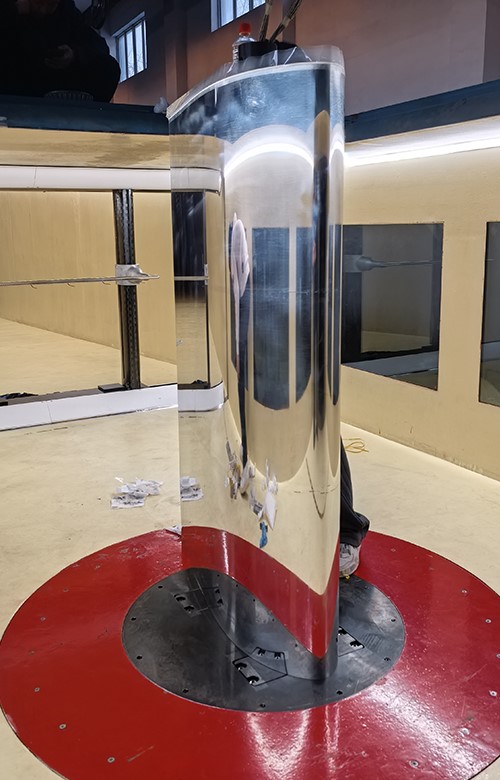
Metal propeller model wind tunnel installation state
Full-process customized engineering services
Test requirement analysis → geometric data arrangement → structure and interface design → process planning → precision machining → assembly and balance inspection → test platform adaptation
The structure and manufacturing scheme are formulated around the target speed, model scale, measurement content and test platform boundary.
The pneumatic shape, mechanical bearing, rotation connection and measurement interface are considered in a unified way to reduce the disconnection between model manufacturing and field joint adjustment.
With geometric accuracy and structural reliability, the aerodynamic performance of the support rotation is studied.
From the precise reduction of the blade profile to the stable connection of the hub interface, every manufacturing detail will affect the rotation test results.
Xi'an Xinghualang Technology Co., Ltd. continues to provide research teams with verifiable and adaptable propeller models and engineering supporting services.
Precision manufacturing each blade, so that the test data closer to the real aerodynamic law.